Blue Cobblestone Quilt

While working on my Scrappy EPP Quilt, I realized I had not shared with you my Blue Cobblestone Quilt.  Last fall I worked on this lap quilt, but since it was a Christmas gift, I was waiting to share it.  Let’s go back to the beginning…
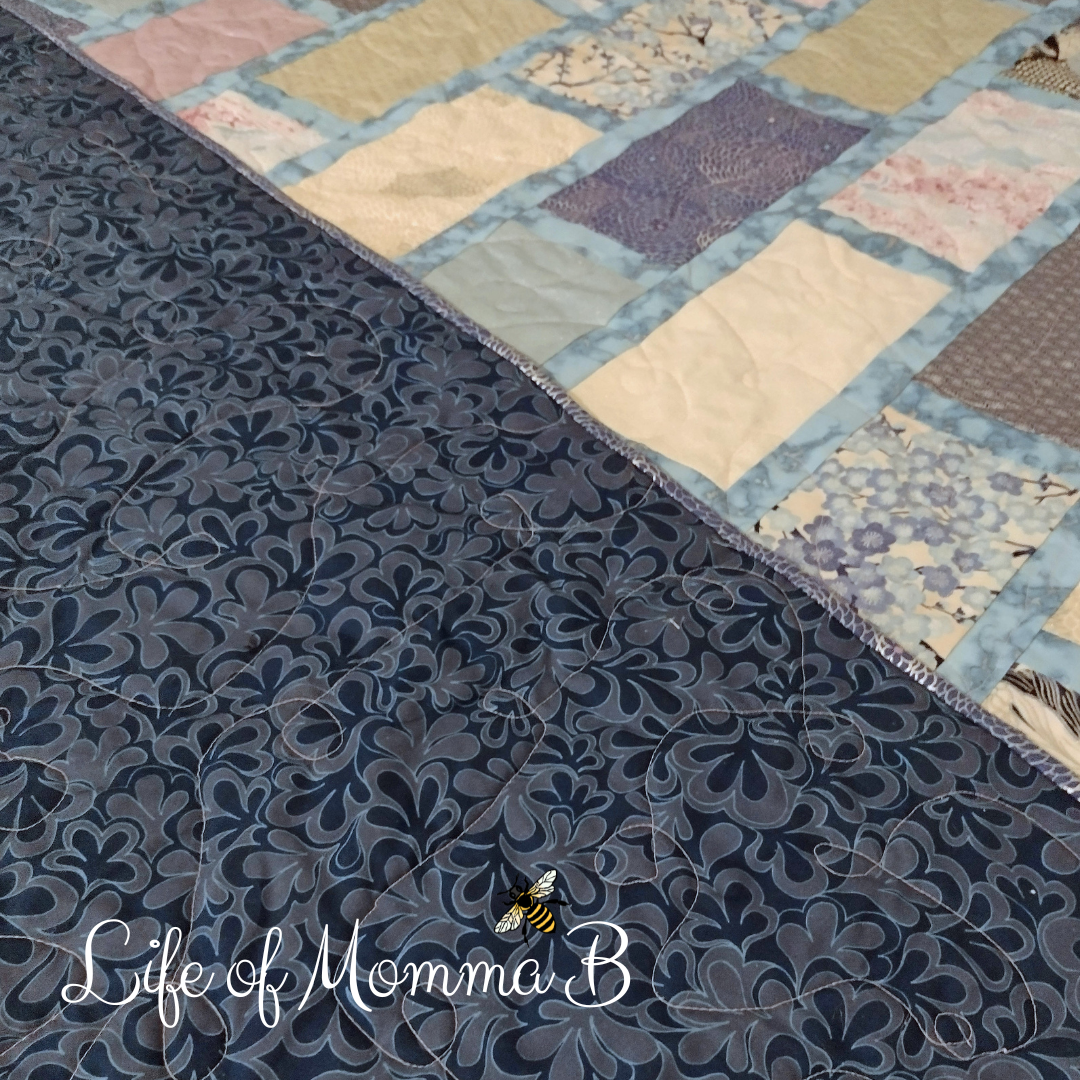
I fell in love with Robert Kaufman’s Imperial Collection while on vacation last summer.  I loved the metallic shine that caused the light to dance when it hit the fabric. And with the slightest movement the design shifted ever so slightly.  The Imperial Collection includes several different colorways. I was trying to be “good” so I stored the Camilla Colorstory in my mind with the intention of finding a pattern that would highlight the fabric’s beauty.  Fast forward a few months and while at a quilt show, one of the vendors had a quilt kit featuring the Lapis Colorstory and I knew my daughter would love it. My photos do not do the fabric justice.

The kit I purchased included a free pattern for the Cobblestone Street Quilt, written by Elise Lea.  Also included in the kit was the layer cake, along with yardage of light blue Wishwell: Silverstone for the sashing and binding. I loved how quickly the quilt top came together.  I opted to do a little free motion quilting on this, and used a large meandering motif. 

With every project I learn something new.  This time I realized that you cannot starch precut fabrics if you need the entire piece.  Each stone block was supposed to be 5×10 inches, so half of the layer cake.  I prefer working with starched fabric, this meant I did not have 10” squares to cut from.  Thankfully this pattern was forgiving and with a few adjustments it all worked out in the end.  So, learn from me and do not starch your precut fabrics.   

I am headed off to work on my EPP project, so until next time take it one stitch at a time. 

Momma B. 

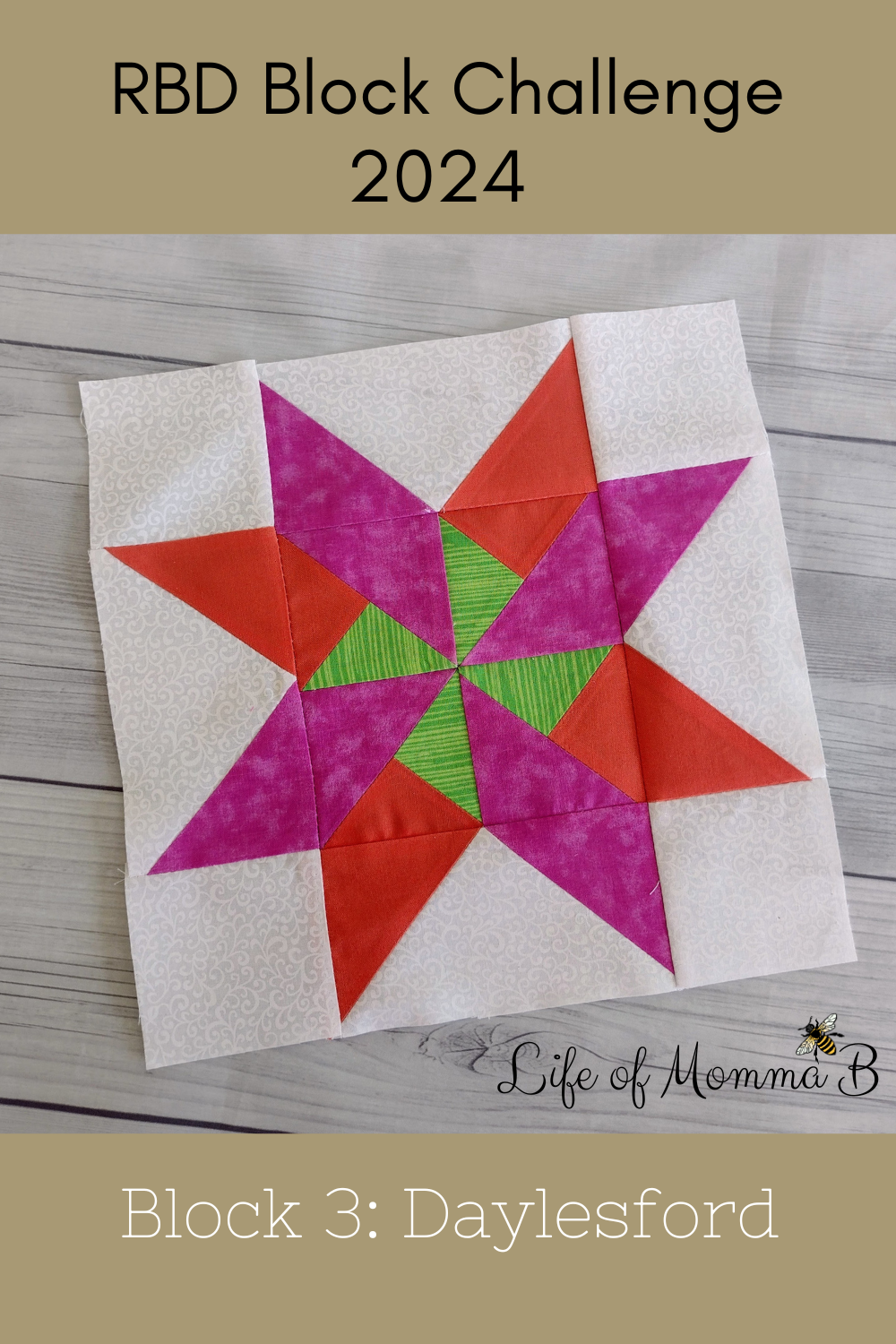
RBD Block Challenge: Block 3, Daylesford

I am all caught up with the RBD Block Challenge, and have completed the first three blocks.  Each Tuesday, except the last week of the month, Riley Blake Designs releases another block in their 2024 Block Challenge.  And I must say, this block was a challenge!

The Daylesford block was designed by Amy Smart from Diary of a Quilter.  It is a variation of the traditional eight-pointed star block with a pinwheel in the center. Lots of little pieces, but it is really just joining half-square triangles and flying geese.  For some reason, I struggled with this block. It just was not my day, and I had to use my seam ripper more than once.  

That brings me to the tip of the day… Seam rippers become dull and should be replaced periodically.  I frequently hear expert quilt teachers reminding us to replace the blade on our rotary cutters, but they don’t tell us to replace our seam rippers.  Just like any blade, it will become dull with use.  A dull seam ripper requires more force to cut treads, and you have an increased risk of cutting your fabric by mistake.  Seam rippers are inexpensive, do yourself a favor and buy a new one.  You will likely be surprised when you realize just how dull your blade is.  

If you are just joining me on the 2024 RBD Block Challenge, check out my first post (here). All the details about this free quilt along are included.  

Until next time, take life one stitch at a time.

Momma B

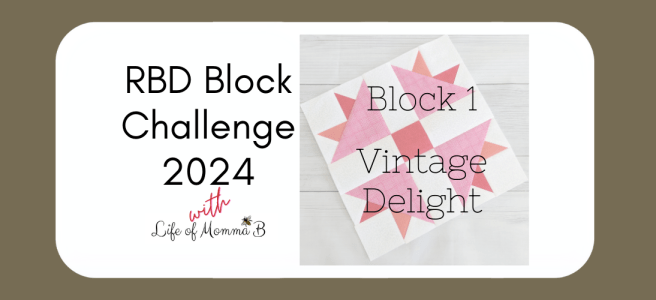
RBD Block Challenge: Block 1

Block 1 of the RBD Block Challenge has been released and it is by no other than Lori Holt. This block, Vintage Delight, features multiple stich-and-flip units that are joined together to form one cohesive block.  

If you are not familiar with Lori Holt, she is an amazing designer that has a flair for taking vintage patterns and making them new again. Check out her newest pattern, Mercantile Sampler, where she places traditional blocks inside circles giving them a new look.  She is the designer behind many of the quilt alongs hosted by the Fat Quarter Shop. In addition to being a fabric and pattern designer she also creates cross stitch patterns that coordinate with her quilts and is an avid crocheter. I am especially looking forward to her upcoming Christmas pattern that will be released this summer featuring Christmas baubles. While she does have a blog, I follow her on YouTube.  

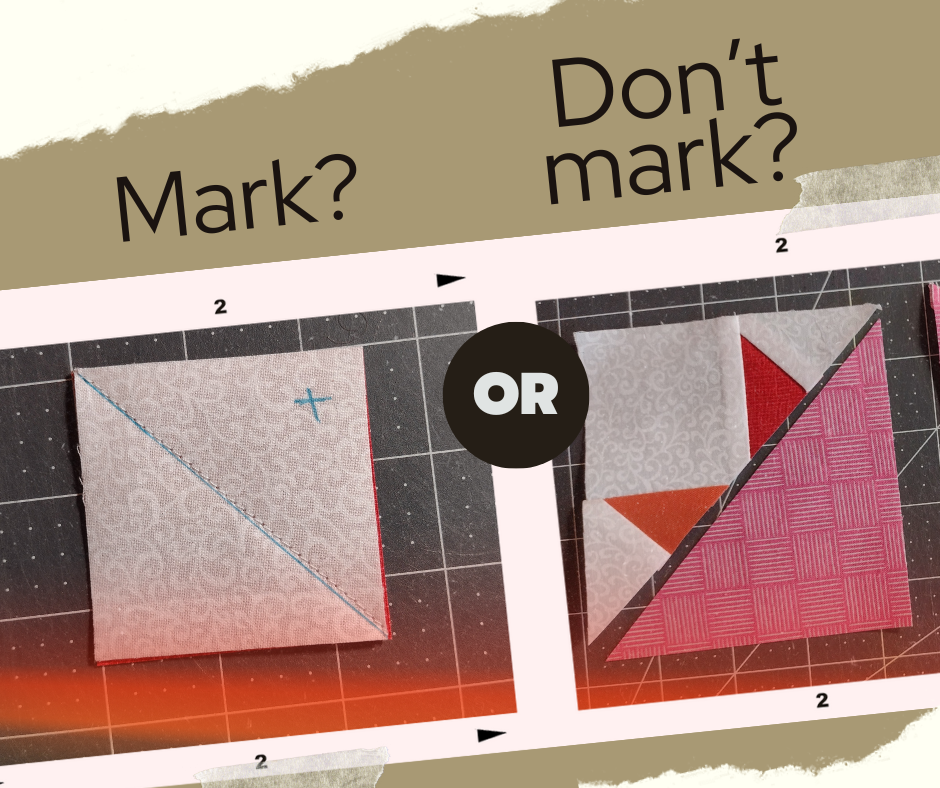
Back to the block at hand and stitch-and-flip blocks. These are not very hard to create and are often used when you want to cover only a corner of a larger block, like when creating snowballs. They can also be used to create flying geese. After the pieces are sewn together, usually on a diagonal, the excess is cut off, and the seam is flipped open to cover the part that was removed. 

Like the old adage of do as I say not as I do. You can save yourself a lot of time and heartache by marking the part you will cut and discard. In addition to marking the diagonal sew line on the back of the fabric, placing a small X on the waste side makes it easier. This is something I usually do, but in a moment of over confidence, I opted not to and cut on the wrong side of the sewing line. As you can see below there is no way to fix this mistake and I had to redo one corner of the block.  You can bet I marked it the second time through. So, do as I say not as I do. and mark the waste before you cut. 

If you missed the beginning of this series, click here to go to the introduction and a link to get all of the patterns in this series. While I wait for next weeks block to be released, maybe I can tackle some of my overdue projects from my UFO list. Here’s to taking life one stitch at a time.

Momma B

NYE Mystery Quilt: Part 2

Progress continues on my Sparkling New Year’s Eve Mystery Quilt.  I was only able to spend one night working on it, so I set out to mark all of my half square triangles for sewing. 

I realize that this was part of the preparation step that was supposed to be done before the sew-along, but I was not able to mark any of them.  But all my squares are now marked and ready to sew.  

When I mark my HSTs, I prefer to mark all of the sew lines.  My go to supplies include a FriXion pen and my Omnigrid Marking Ruler.  The pattern recommends using Deb Tucker’s 180 Studio, Quilters Magic Wand.  I have not personally tried a Magic Wand, but it is essentially the same thing.  They are both ½ inch rulers that you are able to center diagonally on the square and mark the sewing lines, ¼ inch on both sides of the center diagonal.   

As this is not a sponsored post, and I do not receive any compensation for my opinions, here is why I opted for the Omnigrid Marking Ruler.  They are sold in a set of three in various lengths.  This allows me to use a ruler that is right for the job. The rulers are clear and the length is clearly marked in standard 1/8 inch which allows them to be used as a basic ruler when needed.  I find it a plus whenever a tool can serve multiple purposes.  Please note, there are other brands of rulers available. Regardless of which brand you choose, a ½ inch ruler will make all HSTs easier. 

The next step is to sew and cut all of my HSTs, and then the dreaded step of ironing them.  Stay tuned to see as the quilt progresses.